
To understand why Sweden's forests look the way they do today, we need to go back to the 18th and 19th centuries. Back then, vast quantities of wood fuel were needed to power all the ironworks and glassworks that were so vital to Swedish industrial development. At the same time, timber was being exported to Europe. The result was a forest that was both sparse and depleted.
In true pioneering spirit, various measures were taken to save the Swedish forest. In 1903 came what is generally considered the world's first modern Forestry Act, with requirements for replanting and regeneration. A few years later, in 1915, Sweden established its first university forestry programme.
New forest policy in the 1990s
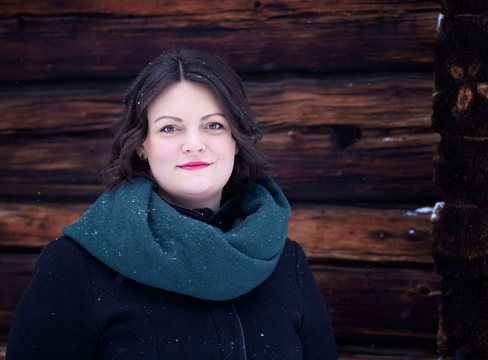
At Linnaeus University in Växjö, Erika Olofsson is Associate Professor of Forest Management. She has studied how a changing climate may come to affect decisions relating to forests and forestry.
Erika Olofsson points out that the forest we have today – dominated by spruce and pine – is the result of decisions made quite some time ago. A large proportion of the timber we harvest today was planted just after the end of the Second World War.
But 30 years ago, major changes were made to forest policy, and in 1994 Sweden's new Forestry Act came into force. It became just as important that the forest be used responsibly, so that it could yield good returns, as that biodiversity be safeguarded.
Since the new law was introduced, more old dead trees have been left in the forest – precisely the kind of deadwood that is a vital prerequisite for many species to thrive. In southern Sweden, the area of old-growth forest has tripled, the area of forest with large-diameter trees has doubled, and the area of older broadleaf-rich forest has increased substantially. "Variation” has become a watchword. If there are different environments – light, dark, dry and damp – the chances are naturally greater for more species to find a place where they can flourish.
“We are in the midst of a transition, but it may not be easy to see with the naked eye. Soon we will have an entirely different mature forest than we have had before, with more pine and hardwood. I see greater interest among forest owners in wanting to try new tree species and management methods. Climate change is also contributing to an awareness of not putting all your eggs in one basket,” says Erika Olofsson.
Her colleague Åsa Rydell Blom, Associate Professor of Wood Science at Linnaeus University, is confident that in the future we will have more – and different – tree species in Swedish forests. Although spruce has long been the most common species, pine has now overtaken it. (Read more about this in Trä, issue 2/2025). In a milder climate with more extreme weather, it becomes important to match tree species and forestry methods to the site.
“We will see a different composition in the forest, particularly in southern Sweden. That is why we in the research community have already started experimenting with other species. When it comes to timber-framed buildings, we need to learn more about how other tree species perform. Perhaps we can use more birch and beech. In Denmark and Germany, they are trialling Douglas fir and Sitka spruce from North America. They seem to have good properties and grow well,” says Åsa Rydell Blom.
Development heading in the right direction
She sees a danger that the debate over how Swedish forests are managed, and should be managed, risks disrupting the positive development that is already under way.
“We have already recognised that the forest should be managed in different ways. However, I believe that as a client you should not demand one method over another, because so many factors come into play. There is no single solution – there are several.”
Åsa Rydell Blom is not particularly worried about the survival prospects of different species in Swedish forests, even though improvements can be made.
“Development is already clearly heading in the right direction. What concerns me is the increase in invasive species such as lupins, Canadian goldenrod and Japanese knotweed. There is a great deal of work to be done there, and these are real, tangible threats to biodiversity in Sweden.”
Text: Malin Age Photo: Linnéuniversitetet